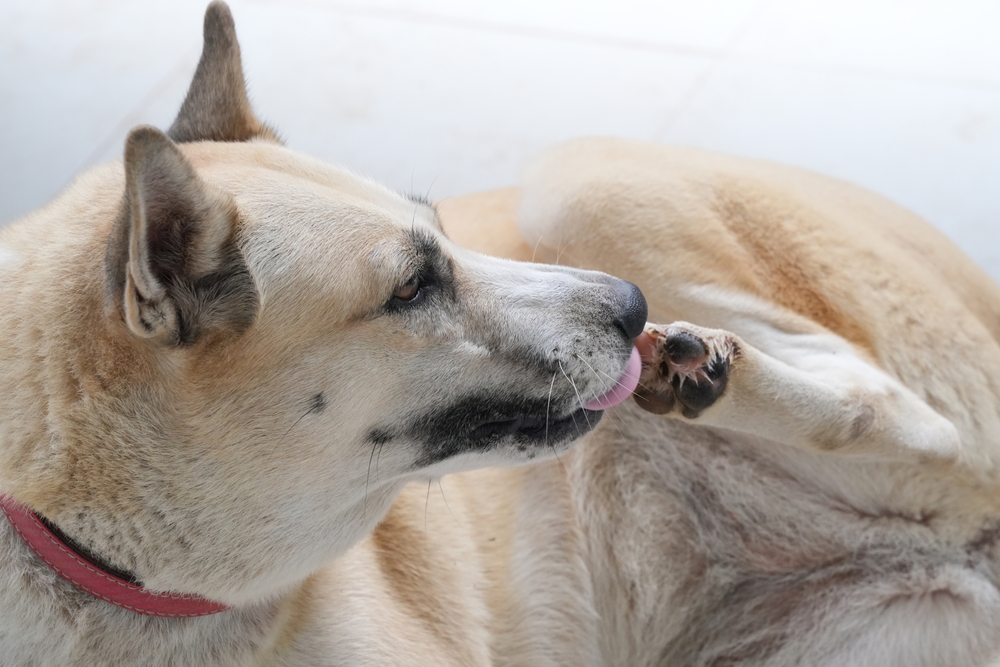
Dogs occasionally lick their paws as part of normal grooming. They may also spend a few moments cleaning their feet after walking through wet grass, mud, or snow.
But when occasional grooming turns into frequent licking, chewing, or nibbling, your dog may be trying to tell you that something is wrong.
Persistent paw licking is not a diagnosis. It is a sign of discomfort with many possible causes—from allergies and skin infections to an injury, parasite, or painful joint. Because licking can further irritate the skin and introduce infection, identifying the cause early may help prevent a small problem from becoming more uncomfortable.
How Much Paw Licking Is Too Much?
A brief paw-cleaning session is usually no reason for concern. Take a closer look when your dog:
- Licks or chews their paws repeatedly throughout the day
- Interrupts sleep, play, or meals to lick
- Focuses intensely on one paw or toe
- Makes slurping or chewing sounds frequently
- Leaves wet spots where they have been resting
- Develops reddish-brown saliva stains on light-colored fur
- Has redness, swelling, odor, discharge, or hair loss
- Limping or seems reluctant to place weight on a paw
- Becomes sensitive when you touch their feet
The pattern can provide useful clues. Licking several paws may point to allergies or contact irritation, while focusing on one paw may suggest an injury, foreign object, broken nail, or localized pain. These are only clues, however—not a reliable way to diagnose the problem at home.
Common Reasons Dogs Lick Their Paws
Environmental Allergies
Environmental allergies are one of the most common explanations for chronically itchy paws.
Dogs can react to allergens such as:
- Grass and tree pollen
- Weeds
- Mold
- Dust mites
- Dander
- Other substances in their surroundings
Unlike people, who often develop sneezing and watery eyes, dogs with allergies frequently show signs through their skin. They may lick or chew their feet, scratch their body, rub their face, or experience recurring ear problems.
Some dogs have symptoms primarily during certain seasons. Others react to indoor allergens and stay itchy year-round. Learn more in our article about seasonal pet allergies.
Flea Allergies and Other Parasites
You don’t necessarily have to see fleas for them to cause an itchy dog. A dog with flea allergy dermatitis can react intensely to flea saliva, and even a small exposure may cause significant itching.
Flea-allergic dogs frequently itch near the base of the tail and along the back, but discomfort can lead to licking and chewing elsewhere, too.
Mites can also cause itching and inflammation. Because these parasites may be difficult to see without testing, a lack of visible pests does not rule them out.
Consistent, veterinarian-recommended parasite prevention matters year-round. Read more about how to recognize a flea allergy in pets.
Food Allergies
Food allergies are less common than many pet owners assume, but they can cause itching involving the feet, face, ears, abdomen, or other areas. Some affected dogs also experience recurrent ear or skin infections or gastrointestinal problems.
A dog can develop an allergy to an ingredient they have eaten previously, so a long-standing diet does not automatically rule out a food reaction.
Frequently changing foods based on guesswork can make the cause harder to identify. If food allergy is suspected, your veterinarian may recommend a carefully controlled elimination diet using a prescription hydrolyzed or novel-protein food. Follow the trial precisely for the recommended period; flavored medications, treats, chews, table food, and access to another pet’s bowl can affect the results.
Our guide to common food allergies in pets explains more about possible signs and the diagnostic process.
Yeast or Bacterial Skin Infections
The normal surface of a dog’s skin contains microorganisms, including bacteria and yeast. When allergies, moisture, inflammation, or repeated licking disrupt the skin barrier, those organisms may multiply and cause an infection.
Possible signs include:
- Red or inflamed skin
- A musty or unpleasant odor
- Greasy skin or discharge
- Bumps, crusts, or sores
- Hair loss
- Brown discoloration around the nails
- Tenderness between the toes
This can create an uncomfortable cycle: an underlying problem makes the feet itch, the dog licks them, the skin becomes more inflamed, and infection makes the itching even worse.
Treating only the allergy may not resolve an active infection. Likewise, treating the infection without controlling the underlying allergy may allow the problem to return.
Contact Irritation
A dog’s paws come into direct contact with grass, cleaning products, lawn treatments, ice-melting chemicals, hot pavement, and many other potential irritants.
Contact irritation may cause redness, burning, or itching, particularly on the pads and between the toes. Symptoms may develop after a walk, yard treatment, floor cleaning, or exposure to a new surface or product.
Rinsing your dog’s feet with plain water after outdoor activity and drying them thoroughly may help remove pollen or mild surface irritants. If you suspect exposure to a chemical product, contact your veterinarian or an animal poison-control service for guidance.
Foreign Objects and Paw Injuries
A dog who suddenly begins licking one foot may have stepped on or picked up something painful. Possible problems include:
- A splinter, thorn, or burr
- A piece of glass or other debris
- A cut or puncture
- An insect sting
- A torn or broken nail
- A pad abrasion or burn
- An object lodged between the toes
- An interdigital cyst or other painful swelling
If your dog will comfortably allow it, look at the top and bottom of the paw, between the toes, around the pads, and along the nails. Do not dig into the skin or attempt to remove anything deeply embedded.
Contact your veterinarian if you find a wound, significant swelling, bleeding, a damaged nail, or an object that you can’t remove easily and safely.
Pain Elsewhere in the Leg
Dogs sometimes lick an area because it hurts—not because the skin itches.
Arthritis, soft-tissue injuries, joint problems, or nerve discomfort may cause a dog to focus on a paw or lower leg. This possibility matters especially when the skin looks normal but the licking repeatedly involves the same limb.
Watch for limping, stiffness, difficulty rising, reluctance to use stairs, changes in activity, or sensitivity elsewhere in the leg. Your veterinarian may need to evaluate the entire limb, not just the paw.
Stress, Anxiety, or Boredom
Repetitive licking can sometimes become a self-soothing or compulsive behavior. It may appear during stressful events, when a dog is left alone, or when the dog lacks sufficient physical activity or mental enrichment.
However, don’t assume behavior is the cause until you’ve considered medical problems. A dog may appear anxious because itchy skin or pain is making it difficult to rest comfortably.
In some cases, both physical and behavioral factors contribute. A medical problem may start the licking, and the behavior may continue even after the original trigger improves.
Why Does Paw Licking Sometimes Get Worse at Night?
Pet owners often notice the problem most at bedtime. There are fewer distractions, the house is quiet, and the dog may focus more intently on an uncomfortable area.
This does not necessarily mean the licking is behavioral. A dog who stays busy during the day may simply have more opportunity to respond to itching or discomfort once the household settles down.
If paw licking is keeping your dog—or you—awake, it deserves veterinary attention.
What Can I Safely Do at Home?
While waiting for your appointment, there are several safe steps you can take:
- Examine the paws in good light if your dog allows you to handle them.
- Rinse the feet with plain, lukewarm water after outdoor activity.
- Dry carefully between the toes.
- Prevent access to recently treated lawns or wet cleaning products.
- Track when and where the licking occurs.
- Note any changes in food, treats, medications, walking routes, or household products.
- Take clear photos of redness or swelling, especially if the appearance changes.
- Prevent excessive licking with a properly fitted recovery collar if your veterinarian recommends one.
Avoid applying human creams, antibiotic ointments, essential oils, hydrogen peroxide, alcohol, vinegar, or medicated products unless your veterinary team specifically advises you to use them. Dogs may lick these substances, and some products can irritate the skin, delay healing, or be unsafe if swallowed.
Do not give your dog a human antihistamine without veterinary guidance. Product ingredients and appropriate doses vary, and an antihistamine will not correct infections, injuries, foreign objects, or many other causes of paw licking.
How Will the Veterinarian Find the Cause?
Because many paw conditions look similar, diagnosis often requires more than a visual examination.
Your veterinarian will ask about:
- When the licking began
- Whether it affects one paw or several
- Whether the problem is seasonal
- Current flea and tick prevention
- Diet, treats, and flavored medications
- Ear, digestive, or previous skin problems
- Recent walks, travel, grooming, or product exposure
- Any changes in mobility or behavior
The examination may include the paws, skin, coat, ears, nails, joints, and gait. Depending on the findings, your veterinarian may recommend skin cytology, a skin scraping, parasite testing, a fungal test, an elimination diet, imaging, or other diagnostic steps.
This systematic approach helps distinguish the underlying problem from complications created by licking.
How Is Persistent Paw Licking Treated?
Treatment depends on the cause. Your dog may need one or more of the following:
- Parasite prevention or treatment
- Medication to control itching
- Antibiotic or antifungal treatment
- A prescribed shampoo, mousse, wipe, or foot soak
- Removal or treatment of a foreign object
- Wound or nail care
- A controlled elimination diet
- Long-term allergy management
- Pain management for an orthopedic problem
- Environmental changes or behavioral support
Many itchy dogs have more than one contributing factor. For example, seasonal allergies may trigger paw licking, which then contributes to a secondary yeast infection. Successful treatment may need to address both.
When Is Paw Licking an Emergency?
Contact your veterinarian promptly if your dog has persistent licking, redness, odor, swelling, sores, hair loss, discharge, bleeding, or signs of pain.
Seek urgent veterinary care when you notice:
- Severe or rapidly increasing swelling
- Uncontrolled bleeding
- A deep wound or puncture
- A paw that appears burned
- Inability to stand or bear weight
- Suspected exposure to a toxic chemical
- Facial swelling, widespread hives, vomiting, collapse, or difficulty breathing
Difficulty breathing or collapse following a possible allergic reaction is an emergency.
Help Your Dog Put Their Best Paw Forward
Your dog’s paw licking may look like a harmless habit, but persistent licking usually has a reason. The sooner that reason is identified, the sooner you can interrupt the itch-and-lick cycle and help your dog feel comfortable again.
At Union Lake Veterinary Hospital, we take the time to look beyond the symptom and investigate the possible allergies, infections, injuries, parasites, or painful conditions behind it. If your dog cannot leave their paws alone, call us at (248) 363-1508 or request an appointment. We offer dermatology services and allergy testing.
Featured image recommendation: A dog gently licking one front paw while resting, with the paw and the dog’s face both clearly visible. The image should feel concerned but not graphic.
Alternative supporting images:
- A close-up of a veterinarian examining between a dog’s toes
- A comparison of a healthy paw and a mildly red, irritated paw
- A dog’s paws being rinsed and dried after an outdoor walk
The diagnostic and treatment framing reflects current AAHA guidance that allergic skin disease requires a systematic, individualized approach and that veterinarians should examine commonly overlooked areas such as the paws, claws, skin folds, and ears.